Showing posts with label Eeli Helin. Show all posts

Wednesday, 6 November 2019

ALBUM REVIEW: Rorcal, "Muladona"

By: Eeli Helin

Album Type: Full Length
Date Released: 08/11/19
Label: Hummus Records


”Muladona” CS//CD//DD//LP track listing:

1. This is how I came to associate drowning with tenderness
2. She drained you of your innocence, and you poisoned her with it
3. I’d done my duty to my mother and father. And more than that, I’d found love
4. A sea of false smiles hiding murder, jealousy, and revenge
5. Carnation were not the smell of death. They were the smell of desire
6. The only constant in this world is blackness of the human heart
7. I was the Muladona’s seventh tale

The Review:

Little did I know how big of a treat I was in for, when I was asked to scribe up the track premiere for the Swiss blackened death/sludge/doom/noise quartet Rorcal earlier this autumn. Prior to that, I recall coming across the band a few times, but never gave them enough attention to fully comprehend what I was ingesting. When the premiere opportunity came along, I quickly and quite profoundly realised how big of a mistake I've made by not really giving the band a chance years earlier. In fact, not doing so proved to be one of the biggest blunder I've made in my entire life, in terms of my music listening habits. The track we premiered over here at THE SLUDGELORD, "A sea of false smiles hiding murder, jealousy and revenge", was so impactful and effective that it plunged me harshly into a very overwhelming Rorcal binge for weeks. Those weeks were full of amazement, awe, and sound-inflicted pleasure that felt otherworldly altogether, and all that time I kept kicking myself for being neglectful towards the band before. I'm certainly glad that has forever changed as of now.

"Muladona" is Rorcal's fifth full-length releasing on November 8th through Hummus Records, thematically based around a novel of the same name by Eric Stener Carlson, mirrored through the bleak and violent whirlwind of dissonant and abrasive death metal, borrowing flavours from blackened aesthetics and noise (quoting myself like a champ here). The author also lends his voice to the band as a narrator throughout the album. The close interaction between the two makes up an extremely transcendental experience, tying the whole epos together in an unprecedented manner, capable of engulfing your focus fully for its entire duration.

Opening with an intro track "This is how I came to associate drowning with tenderness", it's clear right from the beginning that this is something else. The haunting atmosphere created by the amalgamation of drones and the narration, along the drum and bass hits pave the way to a half an hour's worth of godless and violent, utter satisfaction. "She drained you of your innocence, and you poisoned her with it" spews forth an overly sorrowful and dramatic atmosphere, commencing with a slow and airy pace for a good while. Amping up constantly, the track picks up speed and force for a five minutes before exploding into its black metal-esque, blast beat driven final moments. Ending to some insect samples and gasps, it's easy to picture yourself on the narrators position, as you're surely trying to catch your breath before the next track kicks in.

"I'd done my duty to my mother and father. And more than that, I'd found love" is an apocalyptic piece drawing influence from a lot of places. One of the best things on the album is that how seamlessly all influences, all these different tones blend in together. The almost folk-ish approach to some leads join the most abrasive kind of death-flavoured crushing beating while being viewed through a very blackened lens. The vocals also take the spotlight here, as the desperate yet powerful screams carry the story onwards with the narration. The following and the first pre-released track "A sea of false smiles hiding murder, jealousy and revenge" packs in the kind of fury and agony that makes it perhaps the most effective and interesting cut on "Muladona". This shortest and most vile track acts also as a perfect bridge to the second half of the album, being placed right to the middle and having the sinew to capsize the listener's well-being due to its disgusting but fascinating and enveloping nature.

The following pair, "Carnation were not the smell of death. They were the smell of desire" and "The only constant in this world is blackness of the human heart" push Rorcal's musical limits right to the edge of being unbearable noise, but right when the hypnotizing chaos starts to dare getting too much, they change the direction and let you breath. Although most of the album is pretty relentless and suffocating, the short moments of quietness and tranquillity filled with samples and dynamics give just enough air to the album to avoid getting nauseating. The narrative takes a stronger weight towards the end, and the story gets more interesting and compelling throughout, despite being very uneasy and even deranged at times.

The culmination point of the album lies at the pinnacle of it, the magnificent closer that is "I was the Muladona's seventh tale". There's a sense of closure found here, fittingly similar to the last twenty pages of an extremely immersive and rousing book. The tale is brought to its dismal end in a sentimental fashion, picking along the tastier spices from across the album and grinding them into one very eloquently. Massive breakdowns follow each other consecutively, leading ultimately in a mental one. The narrative is brought to an end over few minutes of noisy drones, while you're left in a state of mind that's infuriatingly hard to describe.

It takes time to fully grasp and figure "Muladona" out, let alone to depict it in sensible words. "Muladona" is a grand piece of music portrayed in a setting that hasn't been done before in this extent. It quickly became obvious that not only this album is amongst the top ones of this year for me, it's also amongst the best albums I have ever heard. And all that from a band who's history was completely out of my view before hearing this album. I sincerely hope that some of my blabbering above made even the slightest of sense, and if not else, at least peaked your interest to give it a listen. The feelings that Rorcal is able to generate with "Muladona" are ponderous and many, that should be dealt with accordingly. Long after the album's finished, it'll echo in the silence you need to surround yourself with after experiencing it, calling and alluring you back into its black embrace.

”Muladona” is available HERE


Band info: bandcamp || facebook

Tuesday, 22 October 2019

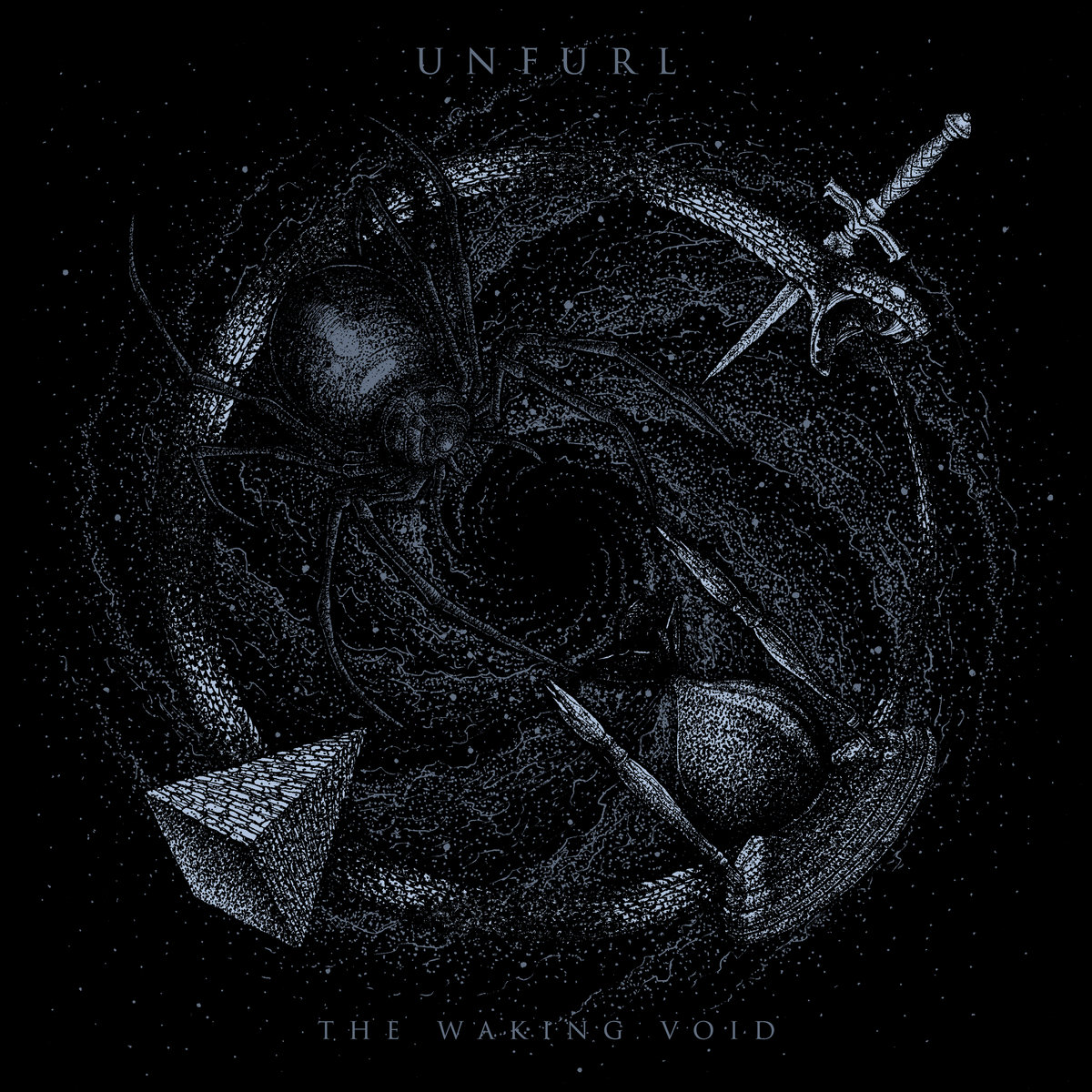
ALBUM REVIEW: Unfurl, "The Waking Void"

By: Eeli Helin

Album Type: Full Length
Date Released: 20/09/2019
Label: Independent


”The Waking Void” CD//CS//DD track listing:

1. Ancestral Spirit
2. Ritual of Fire
3. Null
4. Post-Modern Prometheus
5. Void
6. Withering Aeons
7. Black Widow Hourglass
8. Lazarus Reflex
9. Begrudging Lucidity
10. Guest of the Cavern/Mind Altar
11. Blue Rose

The Review:

Unfurl are one of those bands who are flying under the radar way too fluently while they'd deserve all the attention possible from bigger and smaller medias. Their debut full-length "The Waking Void" was released on September 20th and the buzz started only afterwards, given that it's reasonably increasing constantly. Struggling to get press is pretty much a standard today, but it's bands like this that makes all that seem very unfair; after all, "The Waking Void" is amongst the better albums of the year, and one hell of a debut that came from nowhere.

Having enthusiastic music nerds as friends is a benefit, that proved to be worthwhile with this release as well. After being directed to this album by the #lord himself, it proficiently stole my undivided attention for days. "The Waking Void" is a voluble mix of blackened and partly noisy death metal with shoegazey and mathgrind leanings. One of the most interesting creations on the record are the shorter, noisy and mostly electronic tracks scattered throughout, offering brief pauses and moments of ease amidst the intense battering. While the inclusion of such seemingly minuscule tracks might feel out of place at first, they end up being very integral for the narrative of the entire album.

Apart from the interludes, the heart and soul of "The Waking Void" obviously lies in the main tracks. The beating starts on the second track "Ritual of Fire", showcasing the high compositional level and underlying tones quite well right from the beginning. "Post-Modern Prometheus" carries you away into the noisier, black metal-esque end of the spectrum and holds within one of the most breathtaking breakdown of this decade. The production atmosphere is like a tightening grip, but doesn't turn suffocating as the organic feel is cherished with precision and thought. A short intermission leads the listener to "Withering Aeons", grooving like a motherfucker all the way through to what is perhaps the greatest surprise on the album.

"Black Widow Hourglass" is a moment of pure mourning, expressed through clean vocals and guitars, textured with ambient washes and floaty drum beats. Flowing straight into "Lazarus Reflex", this pair represents the band in their best, weaving a plethora of wildly different flavours into each other seamlessly. It's soon obvious that with these tracks, Unfurl kick in a whole new gear. While the first half had it's own strengths, the latter is where the band relies solely on their personal expression, finding a whole new kind of coherency and momentum to themselves.

Towards the end, the tracks progress into more diverse and fascinating ones, and by the time the final piece "Blue Rose" is over, you'll find yourself wondering why Unfurl aren't on every single metal enthusiast's or music journalist's lips, why an album of this caliber was released independently, why you haven't heard about them before. As futile as those questions are by now, they still bear a meaning in today's music industry, underlining the fact that without heaps of green and direct connections to certain persons of interest, a lot of amazing music gets buried underneath the rubble. We can only hope that this kind of material finds its own audience, preferably sooner than later.


”The Waking Void” is avialble HERE


Band info: bandcamp || facebook

Saturday, 12 October 2019

ALBUM REVIEW: Car Bomb, "Mordial"

By: Eeli Helin

Album Type: Full Length
Date Released: 27/09/19
Label: Independent | 
Holy Roar Records


”Mordial” CD//DD//LP track listing:

1. Start
2. Fade Out
3. Vague Skies
4. Scattered Sprites
5. Dissect Yourself
6. Xoxoy
7. Hela
8. Blackened Battery
9. Mordial
10. Eyecide
11. Antipatterns
12. Naked Fuse


The Review:

If you are one of those people who went their way to declare the new Car Bomb album "Mordial" as the album of the year as soon as it was announced before hearing a single note, and want to stick to that notion without considering another side to it, I'd advice you not to read this review any further. Said album was released on September 27th to a wide acclaim, and the previous statements flew very broadly and high. Even though I got the album a month in advance, scribing a review took a while since after the first listen, I honestly didn't remember or even want to replay it. Given my expectations were gigantic, as their previous album "Meta" is simply one of the greatest records ever written, I still didn't even consider the possibility to be put off completely the way I was. Not to be overwhelmingly negative, after many, many listens, I can say "Mordial" is a good album, but that's about it.

Car Bomb's output has refined and evolved over the years, apparently hitting their peak with the anterior album, this newest one falling somewhere in the middle. "Mordial" is the kind of record that explores what has fallen through the cracks on the previous albums, and it thrives in just that. There's plenty of material that momentarily brings out the old giggling fanboy in me, but in its entirety, the album feels bland and flat. I mentioned that after the first listen I didn't feel the need to get back to it, and that is what underlines the opinion I have about it for the time being.

The customary, brain-melting and comprehension-meddling rhythms and weird effects dominate the overall scapes of "Mordial" exactly in a way most people were expecting them to do. While tracks like "Fade Out", "Vague Skies" and "Antipatterns" push the boundaries of what can be deemed rhythmical, at the same time they lack adhesiveness. It might sound stupid to say the twists and turns are hard to follow when the band in question is what it is, but few steadier and more digestable parts could've made a huge difference. You know, stuff that you can nod to. The integral chaotic and nonsensical aspect to the band is present constantly, but also feels too controlled this time around. Granted, the band's sound is deliberately mechanical, but that doesn't mean that the human touch should be left out completely. The atmosphere on "Mordial" is suffocated and more unnatural than before, which on it's part surely affects the taste it leaves behind it.

Not so surprisingly, the best moments on the album are those you didn't expect at all. Such things would be the clean guitars in the title track, the black metal-ish tremolo picking/ double kick section in "Eyecide", and the random Metallica influences on "Blackened Battery" for example. "Dissect Yourself", "Xoxoy", and "Naked Fuse" express the most "basic" side of the band, if you can call it that, but also work wonderfully each time. I'm aware of the contradictions I'm making here, but that's just to make my point clearer. There's better and worse sides to everything, but sadly the latter seems to stick with me when talking about this album. I’m also pretty surprised how ”Meshuggah” they went this time. Surely that band has had a huge effect on what Car Bomb is doing, but it’s a bit sad the lines can be drawn so directly to that one particular source of influence this time.

There's also a lot of recycled riffs and rhythms, which also goes to give that "between the cracks" feel to "Mordial". I don't doubt that people enjoy this album, but it feels that its place is somewhere in the middle and between everything. Opinions are prone to change, and I don't feel the need to state things definitively as I might be on the other end of the spectrum a year from now, but currently I feel that Car Bomb didn't reach the standard they ever so eloquently set for themselves with their past doings. 

”Mordial” is available HERE


Band info: bandcamp || facebook

Wednesday, 25 September 2019

ALBUM REVIEW: Colored Moth, "Dim"

By: Eeli Helin

Album Type: Full-length
Date Released: 29/08/19
Label: Wolves And Vibrancy Records


”DIM” DD//LP track listing:

1. Letters to Aldous
2. Maelstrom
3. C
4. Whataboutism
5. Cognitive Bias
6. DEL
7. The Social Darwinist Program
8. A
9. Der Blinde Uhrmacher
10. L
11. Indefinite Hiatus
12. M
13. H.useless

The Review:

Colored Moth are a German experimental band who characterise themselves as ambient noise punk, incorporating elements from noise-rock, screamo and post-hardcore, and whose second full-length album "DIM" was released on August 29th through Wolves and Vibrancy Records. Personally I wasn't exactly familiar with the band apart from hearing their previous album "Fragmenting Tensions" partly once. That is also something I slightly regret at the moment, but at least I'll now have more material to sink my teeth into. Silver linings.

Experimentalism tends to be a fancy expression, a polished way of saying "we crammed all these different approaches and influences into one, smashed them to bits and had some fun with the malformed and weird appearing jumble." Given that it's simpler just to throw around that label, the outcome also varies a lot. That tag contains a whole lot of unpredictability and uncertainty, but at best, also the source of being surprising and fascinating for the listener. Even though at times it's hard to wrap your head around their produce, Colored Moth are still from the vital and, well, colourful end of the spectrum.

"Letter to Aldous" kick starts the album in a discordant and emotionally heavy pace. The tones are abrasive and the drive is constant yet gyrating, and this continues through the second track "Maelstrom" as well. Sonically the band is close to the likes of KEN Mode and even early Daughters, though the latter is mainly my observation, don't need any purists to crawl up my ass for it. Rooted in hardcore and expressing themselves very agressively but on the contrary, tangibly touching, the album hits its first quiet waters on "C". There's four of these kind of silent, droning ambient tracks sprinkled throughout the album, respectively titled "C", "A", "L" and "M". Obviously you get the idea by just staring at those letters in that order.

After this brief pause, the band really shows it's teeth with the violently raging, noise-topped "Whataboutism", punkishly advancing and lead-wise deranged "Cognitive Bias", and the simplistical declaring of "DEL". While these tracks start to stand out at this point, it really takes a few listens to get the idea behind them. Each instrumentalist brings their own flavour and feel to the tracks, which all flow like water, all the time. After these and the following one minute dip to the caustic and scorching end of things on "The Social Darwinist Program", the album turns more sectioned and cyclical.

"A" is a bridge to "Der Blinde Uhrmacher" the first slower and perhaps the most fascinating track. The song picks up very haunting and melancholic vibes along the way, letting the listener breathe and sink into the moment. While being instrumental, it feels that Colored Moth's strongest field would surprisingly be here, amidst the less vile and chaotic fields. "L" takes us to the shiver inducing "Indefinite Hiatus". At this moment, the point I just made grows more meaningful, together with the music and compositions. After the last drone piece, the cinematic closer "H.useless" takes the tension to a new level until a tiring, slowly dying clean guitar passage comes to a well-deserved halt.

The album is very, very dualistic, even bipolar. On one hand we have this almost juvenile, rampaging critter, but on the other, there's this mature and thoughtful, oppressing but liberating being. There's a clear division between the two ends, which is why it also feels like a slam to your face each time. The flow isn't problematic at any point, but the unity feels a bit off, mainly during this one bigger, atmospherical shift. I can see the appeal to utilizing the installment approach on an album, albeit the transition is a bit curdled here. To end on a positive note, there's a great deal of beauty hidden in all this cacophony, and it's admirable. I'm surprised there hasn't been more buzz around this band lately, since "DIM" is something that should be more widely taken into account. Colored Moth doesn't reinvent the wheel here, but they show they can quite pleasantly roll it.

”DIM” is available HERE


Band info: bandcamp || facebook

Sunday, 22 September 2019

ALBUM REVIEW: Russian Circles, "Blood Year"


By: Eeli Helim

Album Type: Full-length
Date Released: 02/08/19
Label: Sargent House


”Blood Year” CD//DD//LP track listing:

1. Hunter Moon
2. Arluck
3. Milano
4. Kohokia
5. Ghost on High
6. Sinaia
7. Quartered

The Review:

 "Blood Year" is Russian Circles' seventh album and fourth released by Sargent House. Three years after the instrumental post-metal-ish acts' last album "Guidance", the trio returns in a stronger and more vivid form, matching and even surpassing all the expectations one could've possibly set for the new album.

Whenever bringing up the subject of contemporary, metal-rooted instrumental music, it's practically impossible to survive through the discussion without mentioning Russian Circles. The band's influence on the scene is indisputable, having released a strong and powerful set of albums with unbroken quality standards within the past fifteen years. "Blood Year" provokes haunting imagery of empty streets and post-apocalyptic ruins, much like their earlier albums, but with a more dismal and moving elegance.

After the intro track "Hunter Moon" built entirely on ambient guitars, a rhythmical drum beat and bass lead set off the second track "Arluck", also giving the tone for the rest of the album. Built on simple movements and easily comprehensible patterns, the band demonstrates their stronger output right from the beginning, lifting the track amongst the prime picks of "Blood Year". The atmosphere is eerie, even more so than it has been before. This continues on the following pair "Milano" and "Kohokia". The flow is consistent and flawless, and the tracks are structured to appear both interesting and sensible throughout. I also appreciate the fact that they experiment and play around with tones very little; the main weight is on good and clever compositions and organic, natural emotions caused by just that.

"Ghost on High" is an intermission piece similar to the first track, leading seamlessly into "Sinaia", the longest, most varied, and bleakest of the bunch. At this point it's noteworthy to mention that the whole album has its own distinct feel and characteristics that separate it from Russian Circles' past albums. While the melancholic aspects are there, the sadness never gets overwhelming, not on this record at least. "Sinaia" is a genuine post-metal track that despite it's own moments, doesn't leave as permanent mark to your memory as the other tracks. The course is still kept steady, and the final track is guaranteed to floor you completely. "Quartered" seems to partly abandon the emotional side and fill the spot it left with more violent and pummeling drive, bringing the album to end completely somewhere else in contrast to where it began. The track also excels to mirror its name, inducing sensations of having your limbs torn apart for one reason or the other.

The overall feeling is what sets this album well apart from the others, relying on something else rather than your run-of-the-mill aesthetics. It's hard to say if "Blood Year" is Russian Circles' best album to date, but it sure as hell is worth all the repeats and time it takes to listen to it. Reverting back to what I wrote earlier, the level of quality is still higher than most and stays unshaken.

”Blood Year” is available HERE


Band info: facebook 

Monday, 2 September 2019

ALBUM REVIEW: Cult of Luna, "A Dawn to Fear"

By Eeli Helin

Album Type: Full-length
Date Released: 20/09/19
Label: Metal Blade Records


”A Dawn to Fear” CD//DD//2LP track listing:

1. The Silent Man
2. Lay Your Head to Rest
3. A Dawn to Fear
4. Nightwalker
5. Lights on the Hill
6. We Feel the End
7. Inland Rain
8. The Fall

The Review:

Cult of Luna are a band that has always existed in this sort of a limbo state, at least from my view. Being honest to themselves and their fans about the realities of making music, impossibilities of traveling abroad and doing long tours because of their families and so on, the band has reached a state where they dictate their doings and schedules, and the fans accept that. However, the wait is always agony, and that feeling is greatly fueled by the presence of unpredictability. You never know of or when something happens, you also never know what to expect. As a band whose output has changed throughout the years, each of their albums have their own signature sound. I've repeatedly wondered how deep is the well from where they draw influence and material, and as it turns out, that well is a damn deep and wide one.

”A Dawn to Fear” is Cult of Luna's 8th album (when including their collaboration album with Julie Christmas and excluding the audiobook ”Eviga Riket”) and their first on Metal Blade Records, being released on September 9th. Prior to the announcement, they released the album's first track "The Silent Man" in early May, thrusting forth humongous waves of anticipation and expectations for the release. As the album consists of eight immense tracks adding up to 80 minutes of material, there's a lot to cover so I'll keep this introduction short. You all have heard about the band and should know their material in and out by now.

Starting the album up with a bang, after a feedbacky intro "The Silent Man" proceeds in a surprisingly vivid pace. The driving drum beat picks up the other instruments, and it is instantly clear you're listening to Cult of Luna. Reaching its culmination points in the three minute mark and toning down for a moment just to explode to your face again, the track induces feelings of melancholy not many can pull off. Adding a new level to that, the song falls into a quieter, more ambient washed passage before the shiver inflicting crescendo. "The Silent Man" is already a very familiar track to each of their fans, but that doesn't lessen the impact those final moments have every time you listen to the song. Even if the track has those guaranteed, distinctive characteristics of a Cult of Luna song, when viewed in the full album context, it's the most basic and regular one. When listening through it and getting back to the beginning, it feels weird that this one was picked to open the album, let alone be the first single released from it.

"Lay Your Head to Rest" opens with a few metallic drone swells before heading to a floaty passage led by octave chords. Despite the proggy approach and keeping the tension, the track is very structured. Being of the shorter length, the track feels atypical for the band which proves to be refreshing. At this point the listener also starts to notice the prevalent atmosphere and the production direction. I can't think of any bands uniting organic instrumentation with metallic (read: actually metallic, almost industrial-like) synths, ambients and drones in such an eloquent manner. Picking some reference points from their past, ”A Dawn to Fear” sounds like a mix between ”Somewhere Along the Highway” and ”Vertikal”. By that I don't mean it'd be a repetition of either, but the aesthetic aches to those directions. "Lay Your Head to Rest" is also simplistic in a similar sense as the first track, but is contagious, as you notice the main riff will get stuck in your head for quite a long while afterwards.

The sheer brilliance of this album however, lies ahead. The titular track opens a new chapter in the bands books, unleashing something the first two tracks held back. The titular track starts with a soft, almost jazzy southern rock part that goes on for a good while before introducing layered clean vocals. That moment is beautiful, and the most intimate one on the album. Progressing to a passage with only an organ and deep vocals with some passing high swells, it is with this song that the band touches a ground they haven't before. Getting back to its feet for a controlled refrain before exploding into a sludgy, doomy verse that unites the said southern feels with distorted guitars, that carries the listener to one of the greatest moments in Cult of Luna's history, the multi-layered outro that compresses all these different aspects into one. It takes a while to digest everything that's happening, but it doesn't matter.

Clearly picking up the pace, "Nightwalker" creates a haunting and eerie mood straight from the beginning, a mood that goes on through the few following tracks as well. Constantly getting flesh around its bones, the track explodes to a powerful passage topped with Johannes' vocals, who by the way sounds angrier and more pissed off than ever before. Staying true to their own sound, it's brilliant how they manage to introduce new and fresh facets yet sound exactly like themselves at all times. Even though sticking to the same pattern for a long, long while, it doesn't get numbing or dull at any point. It's that one particular second where everything capsizes  onto its head. You never realize it's coming nor can you expect it, but when the change arrives, it'll result in some chills and patent satisfaction. Going into a shuffle beat and synth lead, "Nightwalker" takes steps towards actual prog, which is definitely not unprecedented, but it's invigorating. You'll nod and sway along until the track returns to the main riff, wielding steadily to a slowly evaporating guitar outro.

Before you even grasp what just happened, "Lights on the Hill" seeps in daunting and frightening way, that makes you surveil and watch your surroundings, as if someone, or rather something, would be on your heels. The song evolves into a sad-toned passage, laying pressure on top of the listener until a tom beat carried crescendo, which turns out to be the single heaviest part on the album as a whole. Quicker rhythms burst out in a blink, leading to a funeral aesthetic outro as if it would prepare you for what's coming next. "We Feel the End" is a ballad like middle piece, calling in mind "Approaching Transition" from their previous album, minus the heavy as balls doom beating. This track relies entirely on emotion, throws in what sounds like a child choir and a vibraphone part. Someone could describe the clean vocals as frail or even weak if put harshly, but the fragile tone simply works time and time again, and there's zero need for anything polished or technically mind blowing in that sense.

"Inland Rain" opens the last twenty minutes of the album with a feeling of cold grief, and a more striding flow, tambourines and all. In this track, one of Cult of Luna's greatest strong suits take the spotlight and continuously catch your attention, and that's the drum work. Having always been extremely strong on that department, the drums shine the brightest instead of being "just" the spine of everything. You'll pick up a ton of nuances and details along the way, and it takes few listens to even be able to focus on anything else. The track overall is a shapeless mass with a weight comparable to a neutron star. The grand piece of the album is the final track "The Fall". It's easiest to describe it as the perfect blend of everything the band has ever done, their whole career compressed to one track. You'll hear nuances from each of their earlier releases, and can draw straight lines to each in the right time. That is pretty much all I can say at this point, you simply have to hear it to believe it and to know what I'm talking about. After this track when the silence hits, after possibly the best individual song they've ever composed, I feel really empty. And you will too.

”A Dawn to Fear” is a humongous oeuvre that takes time to fully digest and to comprehend. It will match and probably surpass any and all expectations you might have for it. Despite the momentarily sluggish start, the first two tracks also blend better into the big picture when you replay the album. It's a lot to take in, but if you survived my ramblings this far, you will survive it too. After all, the flow is impeccable throughout. It doesn't matter if you're familiar with the band or not, it'll snatch your attention before you even know it, and keep you entertained through the entire eighty minutes. Not to prolong this any further, I'm confident to say that ”A Dawn to Fear” is Cult of Luna's best album so far, over twenty years into their career. And that is, pardon my French, a fucking beautiful thing.

”A Dawn to Fear” is available HERE


Band info: bandcamp || facebook

Thursday, 22 August 2019

REVIEW: Pijn & Conjurer, "Curse These Metal Hands"

By: Eeli Helin

Album Type: Full-length
Date Released: 16/08/19
Label: Holy Roar Records


”Curse These Metal Hands” CD//DD//LP tracklist:

1. High Spirits
2  The Pall
3. Endeavour
4. Sunday

The Review:

Pijn and Conjurer are both UK based, roughly categorizable as sludgy post-metal/hardcore bands. Both are on Holy Roar Records' roster and released impeccably strong albums last year, also making a collaboration appearance in ArcTanGent, one of the most momentous and meaningful festivals focusing on bands beyond the mainstream spectrum. The preparation and execution of said performance also planted the seed for a joint studio album titled "Curse These Metal Hands", released on August 16th, and with a release like this, the bands succeed to set a potent and firm example of how collaboration albums should sound. 

Like most of joint productions, this also looked fine on paper. After all, Conjurer's "Mire" and Pijn's "Loss" were amongst the most played albums in my household, as they were in so many others too. I've stated this somewhere else too, but when it comes to collaboration albums, they tend to be a hit or miss, with absolutely nothing in between. But with "Curse These Metal Hands", there wasn't a single reason to get cautious or worried about it. And there still isn't.

The pre-released track "High Spirits" opens up the album, and as the name suggests, it'll elevate your spirit right from the beginning. Slowly growing with clean guitars, tambourines and gentle drum hits, the song evolves in an uplifting manner, keeping a surprisingly positive vibe going throughout. After introducing strong dual vocals on top of a ridiculously heavy verse, the atmosphere tightens but the tone remains warm and wholehearted. 

Keeping in mind both bands' previous albums, this one differs from them greatly, which proves to make "Curse These Metal Hands" a justified, multiplex entirety with it's own narrative. The second song "The Pall" is mainly pulled together from similar realms, but instead shifts the gear into a bleaker direction. The second track also deploys more compositional dynamics, and there's parts where you can identify both bands' own sounds, but everything blends together seamlessly. I personally also really enjoy the writing on this one; albeit the track is almost nine minutes long, there's a ton of different riffs and sections, different tones and colours. It's so easy to build longer tracks over simpler and monotonous riffs that start to feel numbing really soon, and it's really refreshing that this album is bereft of the said approach.

The third track "Endeavour" is a mountain-movingly heavy, crushing two minute intermission. Vicious guitarwork and a constant triplet rhythm make the track stand on it's own, given it's still a smaller piece amidst the three gigantic tracks. What makes it shine through, is that while being in a minor position, "Endeavour" is not a futile transition song. This is often the case when an album is arranged like this, but that is yet another pitfall that the bands avoid very smoothly. "Sunday" closes the album with same emotion that the album started with. It's a consistent and uplifting epic, rejoicing in almost happy melodies, shifting through strong and soft passages until calling it a day for good. Structurally it's close to the other longer tracks, including a sense of closure and finality, utilizing tension in a very animate manner instead of being your run-of-the-mill "funeral procession"-like closing track.

Simply put, "Curse These Metal Hands" is an album that makes you feel good. It manages to create an almost transcendentally comforting and positive atmosphere without getting tacky at any point. That's also something a lot of people (me included) didn't expect from bands whose output tends to be from the more dismal and joyless end of the spectrum. "Curse These Metal Hands" doesn't redefine any genres or brave a new one, but it damn well exceeds in what it is set out to be; a perfect amalgamation of two different bands coming together.


"Curse These Metal Hands" is available HERE


Band info: Pijn || Conjurer